6 Essential Tools for Indoor Herb Gardening: From Seed Starting to Harvest
The sharp mineral scent of perlite mixing with peat moss signals the start of every successful indoor herb garden. Your fingertips press into soil that holds together without clumping, testing moisture content before dropping basil seeds into their new home. Essential tools for indoor herb gardening transform kitchen windowsills into production zones where scissors snip fresh oregano at 6 PM for dinner plating, and those six fundamental implements determine whether seedlings thrive or fade within their first critical weeks.
Materials & Supplies
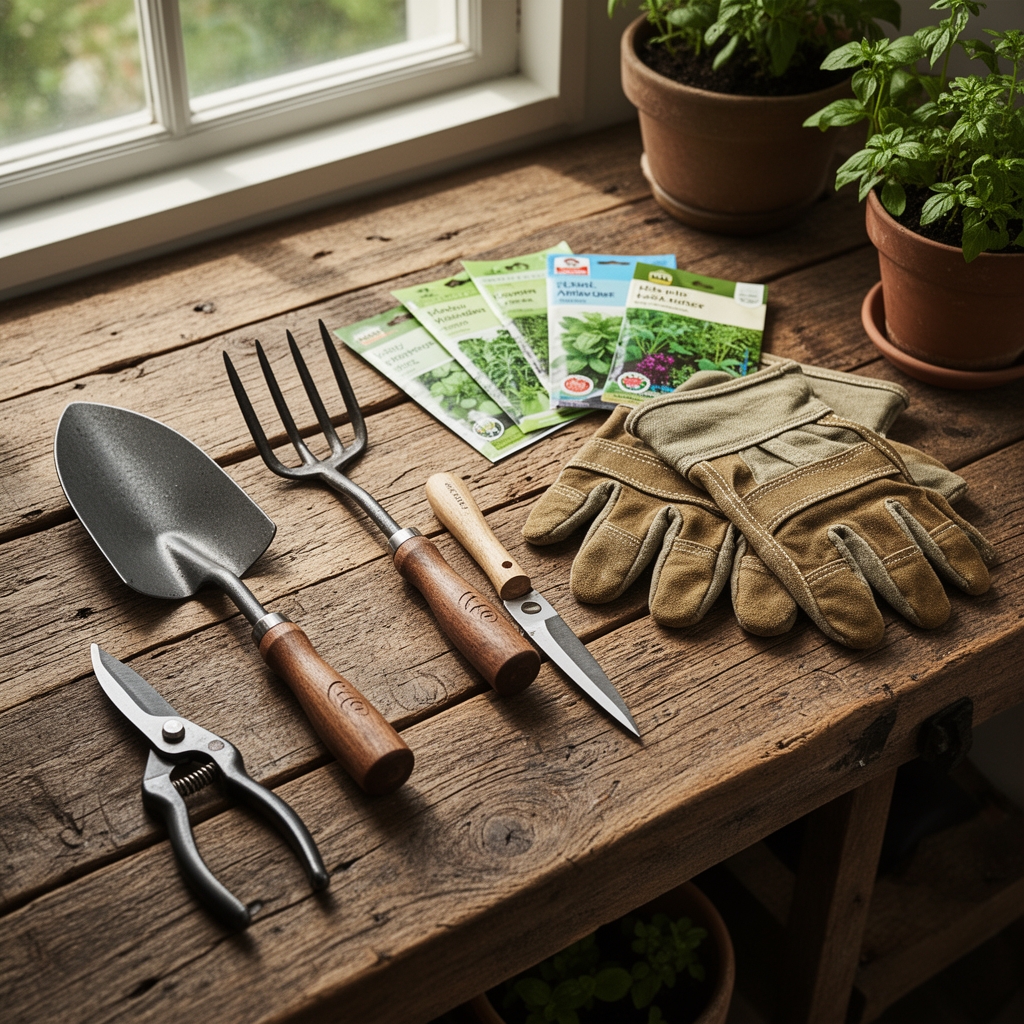
Seed Starting Trays with Humidity Domes
Select 72-cell trays for basil, cilantro, and parsley. The cells measure 1.5 inches deep, providing adequate root development space before transplanting. Clear domes maintain 70-80% humidity during germination.
Full-Spectrum LED Grow Lights
Position lights 6 inches above seedlings, delivering 6000-6500K color temperature for vegetative growth. Provide 14-16 hours daily. Fixtures consuming 24-40 watts cover a 2×2 foot growing area efficiently.
Potting Mix (Soilless)
Blend 60% peat moss or coco coir, 30% perlite, and 10% vermiculite. Target pH of 6.0-6.8 for optimal nutrient availability. Avoid garden soil indoors, as it harbors pathogens and compacts rapidly in containers.
Balanced Liquid Fertilizer (5-5-5 NPK)
Apply at half strength every 14 days after true leaves emerge. Fish emulsion provides nitrogen for leafy growth. Seaweed extract supplies trace minerals including iron, manganese, and zinc.
3-Inch Bypass Pruners
Sharp blades make clean cuts on woody stems like rosemary and thyme. Sterilize between plants using 70% isopropyl alcohol to prevent disease transmission.
Moisture Meter
Insert probe 2 inches into soil. Read at root zone depth. Water when readings drop to "3" on a 10-point scale. Overwatering kills more indoor herbs than any other factor.
Timing & Growing Schedule
Indoor herb gardens operate independently of Hardiness Zones since you control temperature and light. Maintain ambient temperatures between 65-75°F for Mediterranean herbs like basil, oregano, and thyme.
Days to Maturity vary by species. Basil reaches harvest size in 60-75 days from seed. Cilantro bolts quickly at 50-55 days. Parsley requires 70-90 days but produces continuously for months once established.
Start seeds any time of year, though autumn and winter plantings benefit most from supplemental lighting. Natural daylight drops below 10 hours in northern latitudes from October through February, making grow lights essential rather than optional.
Succession plant every 3 weeks for continuous harvests. When your first basil tray develops 4-6 true leaves, start the next batch. This rotation prevents harvest gaps.
Step-by-Step Instructions
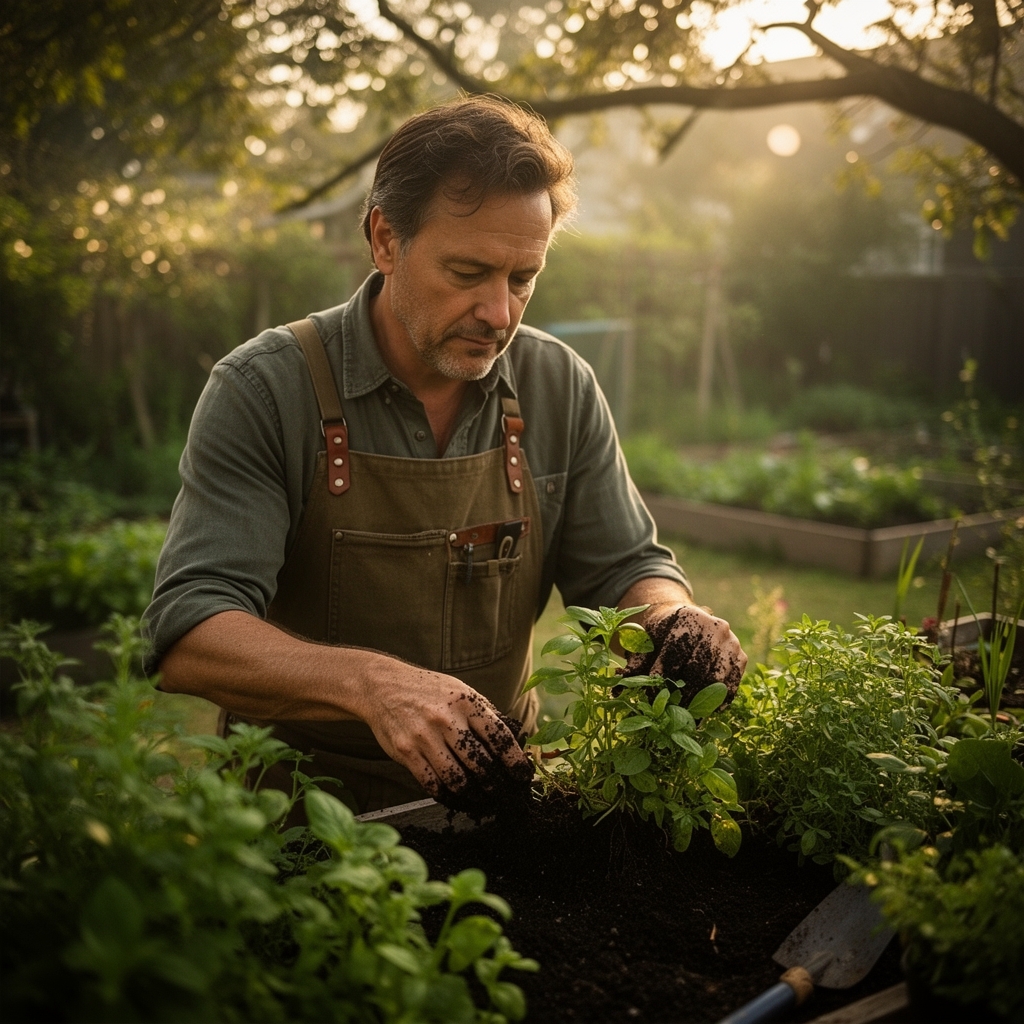
Phase 1: Sowing
Fill seed trays with pre-moistened potting mix. Press soil gently to eliminate air pockets. Plant basil seeds 1/4 inch deep, spacing one seed per cell. Cover lightly with vermiculite for moisture retention without blocking light.
Place humidity dome over tray. Position under grow lights. Maintain soil temperature at 70-75°F using a seedling heat mat if ambient room temperature falls below 65°F.
Pro-Tip: Soak parsley seeds in lukewarm water for 12 hours before planting. This softens the hard seed coat, improving germination rates from 55% to 85%.
Phase 2: Transplanting
Remove humidity dome when 75% of seeds germinate (typically 5-10 days for basil, 14-21 days for parsley). Transplant to 4-inch pots when seedlings develop two sets of true leaves beyond the initial cotyledons.
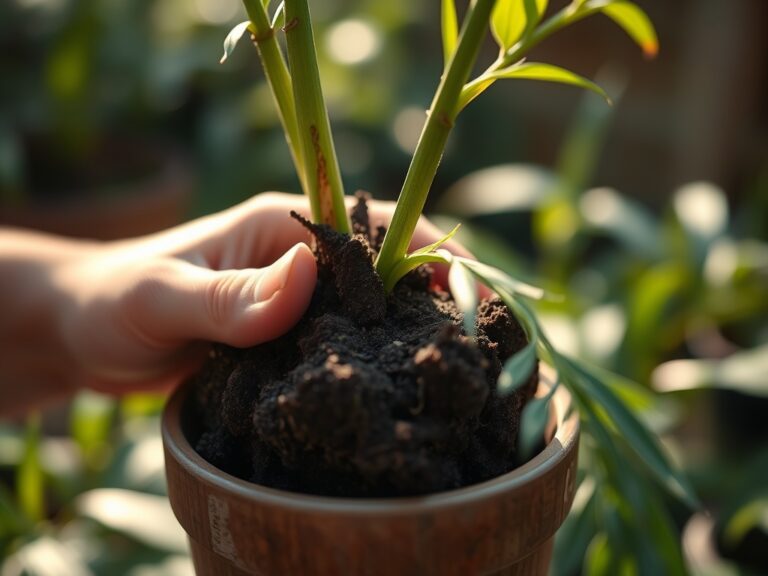
Water thoroughly after transplanting. Press soil around the stem base to eliminate air gaps that dry out roots. Position lights 6-8 inches above new transplants.
Pro-Tip: Bury basil stems up to the first set of true leaves during transplanting. Buried stem sections develop adventitious roots, creating stronger plants with enhanced drought tolerance.
Phase 3: Establishing
Pinch growing tips when plants reach 6 inches tall. This forces lateral branching, increasing leaf production by 40-60%. Remove flower buds immediately on basil and cilantro to extend harvest windows.
Rotate containers 180 degrees every 3 days to prevent phototropic leaning. Clean grow light fixtures monthly, as dust accumulation reduces light intensity by 25%.
Pro-Tip: Add mycorrhizal fungi inoculant at transplanting. These beneficial organisms colonize roots, extending nutrient absorption range by 100-1000 times and improving drought resistance.
Nutritional & Environmental Benefits
Fresh basil contains 18% of daily vitamin K requirements per 2-tablespoon serving. Parsley delivers 108% of vitamin K and significant vitamin C (11 mg per tablespoon). These nutrients degrade 50% within 7 days of commercial harvest, making home-grown herbs nutritionally superior.
Indoor herb gardens filter volatile organic compounds from household air. NASA studies document that leafy plants remove formaldehyde, benzene, and trichloroethylene at rates of 10 micrograms per hour per square foot of leaf surface.
Flowering herbs attract mason bees and other native pollinators when moved outdoors seasonally. A single female mason bee pollinates as effectively as 100 honeybees, supporting local food systems.
Advanced Methods
Small Space Solutions
Vertical tower gardens stack 6-8 growing levels in a 2-square-foot footprint. Install under-cabinet LED strips in kitchens for passive herb production. Magnetic planters attach to refrigerators, utilizing unused vertical surfaces.
Organic & Permaculture Approaches
Top-dress containers with 1/4 inch worm castings monthly instead of liquid fertilizers. Brew actively aerated compost tea by bubbling finished compost in water for 24 hours. Apply as foliar spray to introduce beneficial bacteria that outcompete pathogens.
Companion plant basil with tomatoes (even indoors) to improve flavor compounds and repel aphids through volatile terpenoid production.
Season Extension Techniques
Move outdoor summer herbs inside before first frost. Acclimate gradually over 10 days, reducing outdoor time by 90 minutes daily. Trim back 30% of foliage to reduce transplant shock.
Use south-facing windows combined with supplemental lighting during winter months. Natural sunlight provides full spectrum benefits that LEDs approximate but don't perfectly replicate.
Troubleshooting
Symptom: Yellowing Lower Leaves with Green Veins
Solution: Nitrogen deficiency. Increase fertilizer concentration to full strength (not half strength) or reduce feeding intervals to every 7 days. Check soil pH, as readings below 5.8 lock out nitrogen availability.
Symptom: White Powdery Coating on Leaf Surfaces
Solution: Powdery mildew from insufficient air circulation. Position a small fan to create gentle air movement across plants. Reduce humidity below 60%. Spray affected plants with 1 teaspoon baking soda per quart of water weekly until symptoms resolve.
Symptom: Leggy Seedlings with Pale Leaves
Solution: Insufficient light intensity or excessive distance between lights and plants. Lower fixtures to 4 inches above seedlings. Verify grow lights deliver minimum 2000 lumens per square foot.
Symptom: Wilting Despite Moist Soil
Solution: Root rot from Pythium or Phytophthora fungi. These pathogens thrive in waterlogged, oxygen-deprived soil. Discard affected plants and soil. Sterilize containers with 10% bleach solution. Improve drainage by adding 20% more perlite to potting mix.
Symptom: Brown Leaf Tips and Edges
Solution: Salt accumulation from over-fertilization or chlorinated tap water. Flush containers with distilled water equal to 3 times the pot volume every 6 weeks. Alternatively, let tap water sit uncovered for 24 hours before use, allowing chlorine to evaporate.
Storage & Maintenance
Water when the moisture meter reads "3" or when the top inch of soil feels dry to touch. Most herbs require watering every 3-5 days indoors, equivalent to 1 inch of water per week. Containers with drainage holes prevent root suffocation from standing water.
Feed every 14 days during active growth periods (spring and summer). Reduce to monthly feeding during winter when growth naturally slows. Flush soil every 8 weeks to prevent salt buildup.
Harvest in the morning after dew evaporates but before afternoon heat stress. Cut stems 1/4 inch above leaf nodes to encourage branching. Never remove more than 30% of total plant mass in a single harvest.
Post-Harvest Storage
Wrap fresh herbs in slightly damp paper towels, then place in perforated plastic bags. Store in the refrigerator crisper drawer at 40-45°F. Basil keeps 5-7 days; parsley and cilantro last 10-14 days.
For long-term storage, freeze chopped herbs in ice cube trays covered with olive oil. Each cube contains approximately 1 tablespoon of herbs, perfect for cooking applications.
Dry herbs by hanging bundles upside down in a dark, well-ventilated space at 60-70°F. Proper drying takes 7-10 days. Store dried herbs in airtight glass containers away from light, maintaining potency for 6-12 months.
Conclusion
Your indoor herb garden success depends on matching light intensity to plant requirements, maintaining proper soil moisture through measurement rather than guessing, and feeding consistently with balanced nutrients. These six essential tools create the foundation for year-round harvests that outperform grocery store herbs in both flavor concentration and nutritional density. Share your setup photos and harvest weights in local gardening Facebook groups to inspire neighbors toward food self-sufficiency.
Expert FAQs
What are the best herbs for beginners starting indoor gardens?
Basil, mint, and chives tolerate beginner mistakes better than other herbs. These species forgive irregular watering and less-than-optimal light conditions while still producing usable harvests within 60 days of planting.
How do I prevent leggy growth in indoor herb seedlings?
Position grow lights 4-6 inches above seedlings, providing 14-16 hours of daily exposure at 6000K color temperature. Leggy growth indicates insufficient light intensity or excessive heat. Lower ambient temperatures to 65-70°F to prevent stretching.
Can I grow herbs indoors without artificial lighting?
South-facing windows receiving 6+ hours of direct sunlight support Mediterranean herbs like rosemary, thyme, and oregano. Basil and parsley require 8+ hours. North-facing windows lack sufficient intensity for any herbs without supplemental lighting.
How often should I fertilize indoor herbs?
Apply half-strength balanced liquid fertilizer (5-5-5 NPK) every 14 days during active growth. Reduce to monthly applications in winter. Avoid fertilizing newly transplanted seedlings for 3 weeks, as starter mix contains sufficient nutrients.
Why does my indoor basil keep flowering despite regular harvesting?
Temperature stress or inconsistent watering triggers premature bolting. Maintain temperatures between 65-75°F and consistent soil moisture. Pinch flower buds immediately upon appearance, and harvest upper stem sections aggressively to redirect energy toward leaf production.