7 Steps to Prepare a Wildflower Meadow Site
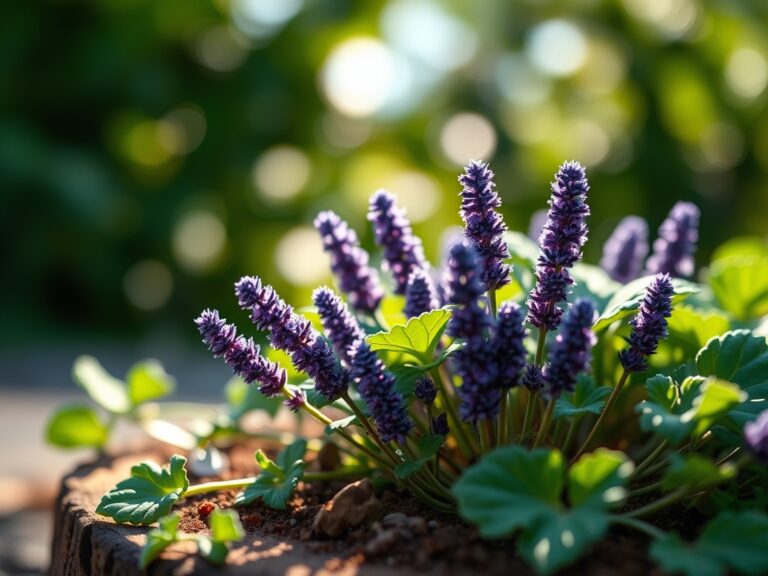
Transforming compacted turf or fallow ground into a self-sustaining wildflower meadow demands calculated soil disturbance, selective nutrient depletion, and precise timing. Learning how to prepare a wildflower meadow site means reversing decades of fertilizer accumulation, eliminating competitive perennial grasses, and creating seed-to-soil contact across variable microtopography. The reward is a low-input perennial system that supports 40 or more native forb species within three growing seasons.
Materials
Successful site preparation hinges on matching amendments to existing soil chemistry. Test for pH, nitrogen, phosphorus, and cation exchange capacity before purchasing inputs.
For Alkaline Soils (pH > 7.2):
- Elemental sulfur at 5 lb per 100 sq ft to lower pH by 0.5 units
- Composted pine bark fines (pH 5.0-5.5)
- Organic starter fertilizer 4-4-4 applied at half the turf rate
For Acidic Soils (pH < 6.0):
- Dolomitic limestone at 10 lb per 100 sq ft
- Low-nitrogen organic meal 2-3-2
- Wood ash in quarter-inch layers for minor pH correction
Universal Equipment:
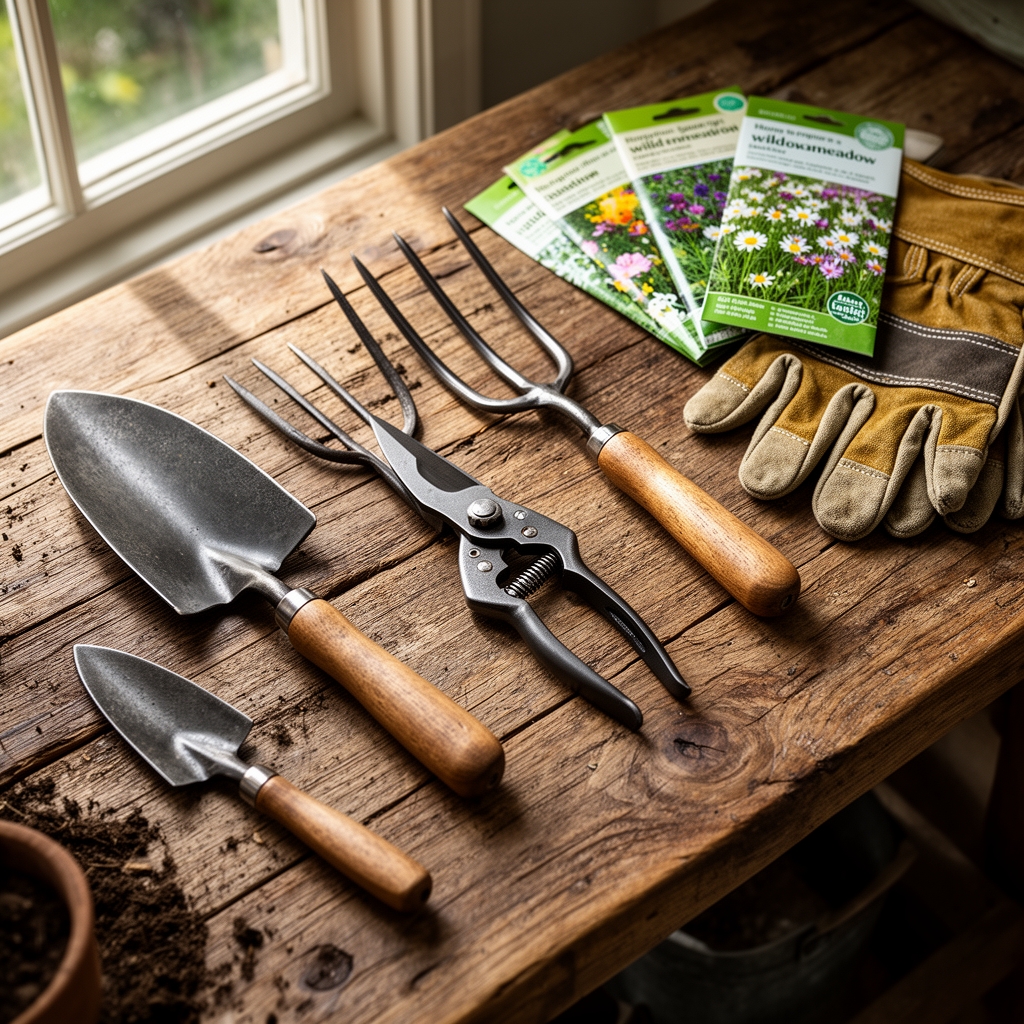
- Sod cutter with 1.5-inch depth setting
- Walk-behind rototiller, rear-tine model
- Landscape rake with 36-inch head
- Lawn roller, 150 lb capacity
- Hand-pump sprayer for selective herbicide (glyphosate at 2% solution for perennial grass)
- Seed broadcaster for rates below 10 lb per acre
Invest in mycorrhizal inoculant containing Glomus intraradices and Rhizophagus irregularis. Native forbs form arbuscular mycorrhizal associations that increase phosphorus uptake by 300 percent in low-fertility conditions.
Timing
Align soil preparation with regional hardiness zones and the phenology of target species.
Zones 3-5 (Northern Tier):
- Fall preparation: September 1 to October 15
- Spring seeding: April 15 to May 30, after final frost date
- Cold stratification for 60-90 days benefits Rudbeckia and Echinacea
Zones 6-7 (Transition Belt):
- Fall preparation: October 1 to November 15
- Dormant seeding: December through February on frozen ground
- Spring seeding: March 15 to April 30
Zones 8-9 (Southern Regions):
- Site work: November through January during winter dormancy
- Early spring seeding: February 1 to March 15
- Avoid summer establishment due to moisture stress
Prepare sites six months before seeding to exhaust the weed seed bank. Multiple passes with shallow cultivation deplete viable seeds in the top two inches of soil profile.
Phases
Sowing Phase
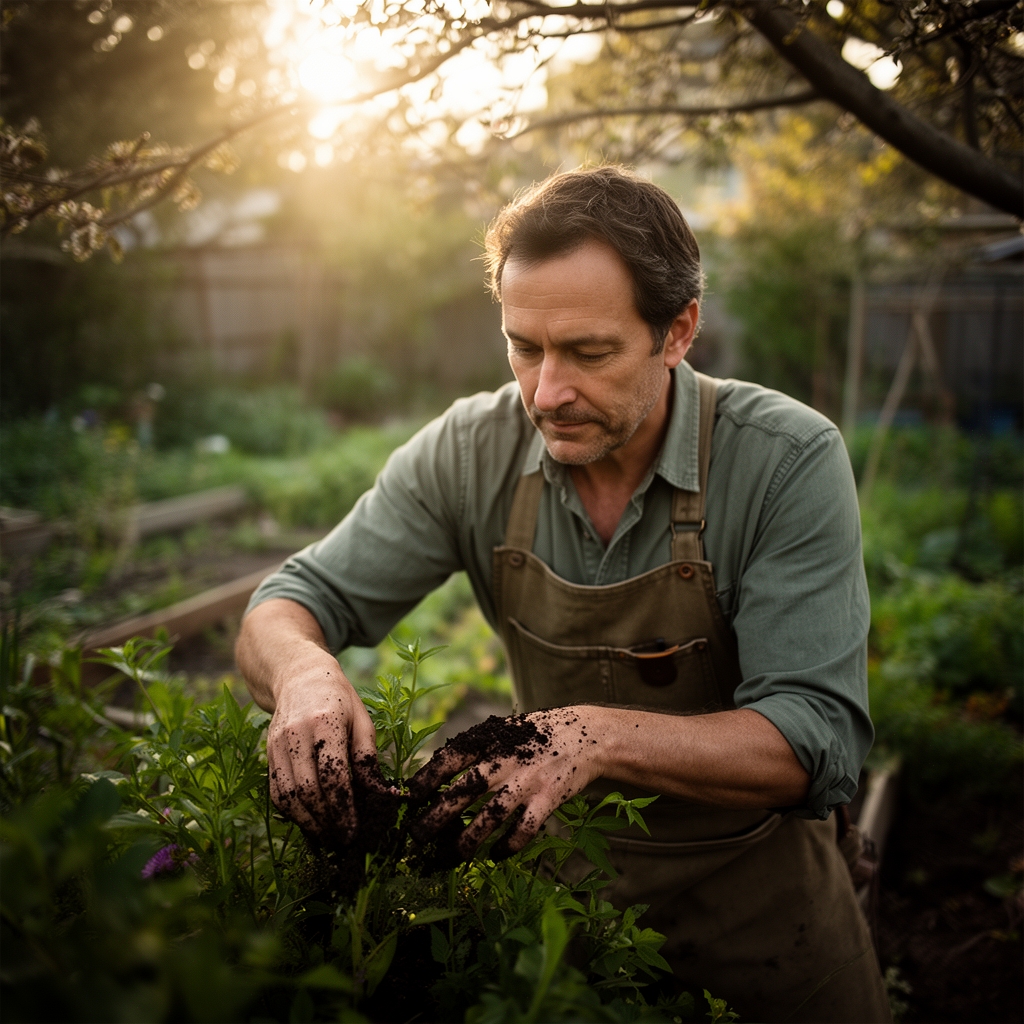
Remove existing vegetation to the root crown. Use a sod cutter for turf, taking one-inch slices. Shake soil from roots and compost the material off-site to prevent nutrient recycling. Till the exposed soil to six-inch depth, then irrigate to germinate weed seeds. After 14 days, perform a second shallow tillage at two inches to kill emerged seedlings without bringing dormant seeds to the surface.
Reduce soil nitrogen if a test shows levels above 15 ppm. Spread three inches of coarse sand or incorporate high-carbon sawdust at one cubic yard per 500 sq ft. This immobilizes nitrogen through microbial tie-up, favoring stress-tolerant native forbs over aggressive grasses.
Pro-Tip: Broadcast seed in two perpendicular passes to ensure uniform distribution. Walk at 2 mph with a chest-mounted spreader. Target rate is 8-12 lb per acre for mixed forb seed.
Transplanting Phase
For immediate visual impact or slopes prone to erosion, install plug transplants on 18-inch centers. Dig holes twice the root ball width. Mix mycorrhizal inoculant directly into the planting hole at 1 teaspoon per plug. Firm soil around roots to eliminate air pockets that disrupt capillary water movement.
Water transplants with a starter solution of 1-2-1 liquid fertilizer diluted to 200 ppm nitrogen. Apply 8 oz per plant. Avoid high-nitrogen formulas that promote foliar growth at the expense of root development.
Pro-Tip: Transplant during overcast conditions or after 4 p.m. to reduce transplant shock. Root systems establish faster when auxin distribution favors downward growth rather than transpiration management.
Establishing Phase
First-year meadows require biweekly mowing to four-inch height from week six through week sixteen. This practice suppresses fast-growing annuals and promotes basal branching in perennial forbs. Mow when weed stems reach eight inches but before seed set.
Irrigate only during establishment, providing one inch per week if rainfall is below that threshold. Use a rain gauge to track inputs. Shallow, frequent watering encourages shallow roots. Deep, infrequent irrigation trains roots to explore lower soil horizons.
Pro-Tip: Mark seeded areas with flags and avoid foot traffic for 90 days. Soil compaction reduces oxygen availability, limiting root respiration and nutrient uptake.
Troubleshooting
Symptom: Dense mats of annual grasses outcompeting forb seedlings.
Solution: Spot-treat with clethodim herbicide at 0.5 oz per gallon. Clethodim is grass-selective and will not harm broadleaf wildflowers.
Symptom: Chlorotic leaves and stunted growth in alkaline soils.
Solution: Iron deficiency. Apply chelated iron (Fe-EDDHA) as a foliar spray at 1 teaspoon per gallon every 14 days until greening occurs.
Symptom: Damping-off in spring-seeded areas with heavy clay.
Solution: Fungal pathogen (Pythium spp.) thrives in saturated soil. Improve drainage with two inches of coarse sand tilled to four-inch depth. Reduce irrigation frequency.
Symptom: Rabbit or deer browsing on young shoots.
Solution: Install temporary poultry netting at 24-inch height around perimeter. Remove after plants reach 12 inches and develop secondary compounds that deter herbivory.
Symptom: Poor germination despite proper seeding rate.
Solution: Seed-to-soil contact failure. Re-roll seeded areas with an empty lawn roller or apply quarter-inch layer of weed-free straw as a moisture-retaining mulch.
Maintenance
Year two onward, meadows become self-regulating with minimal inputs.
- Mow once annually in late winter (February-March) to four-inch stubble. Remove thatch if accumulation exceeds half an inch.
- Do not fertilize. Excess nitrogen favors cool-season grasses and reduces floral diversity by 30 percent.
- Irrigate only during droughts exceeding 21 days without rain. Apply one inch of water per event.
- Divide aggressive forbs (Monarda, Solidago) every four years to prevent monoculture drift.
- Collect seed from desirable species in late summer. Broadcast over bare patches at 1 oz per 10 sq ft.
Monitor for invasive species monthly during the growing season. Hand-pull spotted knapweed, crown vetch, and Canada thistle before seed set.
FAQ
How long does a wildflower meadow take to establish?
Eighteen months for recognizable floral display. Three years for full ecological function with balanced forb-to-grass ratios.
Can I prepare a site without herbicides?
Yes. Use solarization by covering cleared ground with clear polyethylene for eight weeks during summer. Soil temperatures above 140 F kill weed seeds and perennial roots.
What seed mix ratio works best?
Seventy percent perennial forbs, twenty percent native grasses, ten percent annual forbs for first-season color. Adjust based on regional ecotype availability.
Do wildflower meadows need irrigation after establishment?
No. Deep-rooted prairie species access moisture below twelve inches. Supplemental water promotes weedy annuals.
How do I increase species diversity over time?
Introduce new species as plugs rather than seed into established meadows. Seed competition from existing plants prevents germination in mature swards.