9 Steps to Prepare a Lawn for New Sod
Preparing a lawn for new sod installation separates successful establishment from patchy, dying turf that wastes money and time. The difference lies in soil preparation, a process that transforms compacted clay or depleted earth into a root-friendly substrate. A properly prepared bed allows grass roots to penetrate 6 to 8 inches within the first 30 days, anchoring the sod against wind, drought, and foot traffic. Most failures occur because homeowners skip critical steps or rush the process, laying expensive sod on ground that cannot support healthy growth.
Materials
Begin with a soil test kit to measure pH and nutrient levels. Target a pH range of 6.0 to 7.0 for cool-season grasses and 6.5 to 7.5 for warm-season varieties. If pH sits below 6.0, incorporate dolomitic limestone at 50 pounds per 1,000 square feet. For alkaline soils above 7.5, apply elemental sulfur at 10 to 15 pounds per 1,000 square feet.
Select a starter fertilizer with a 1-1-1 or 1-2-1 NPK ratio. A 10-10-10 synthetic blend works for rapid establishment, but organic alternatives like feather meal (12-0-0) combined with bone meal (3-15-0) and kelp meal (1-0-2) provide slow-release nutrition. The ideal formulation should deliver 0.5 to 1.0 pound of nitrogen per 1,000 square feet at installation.
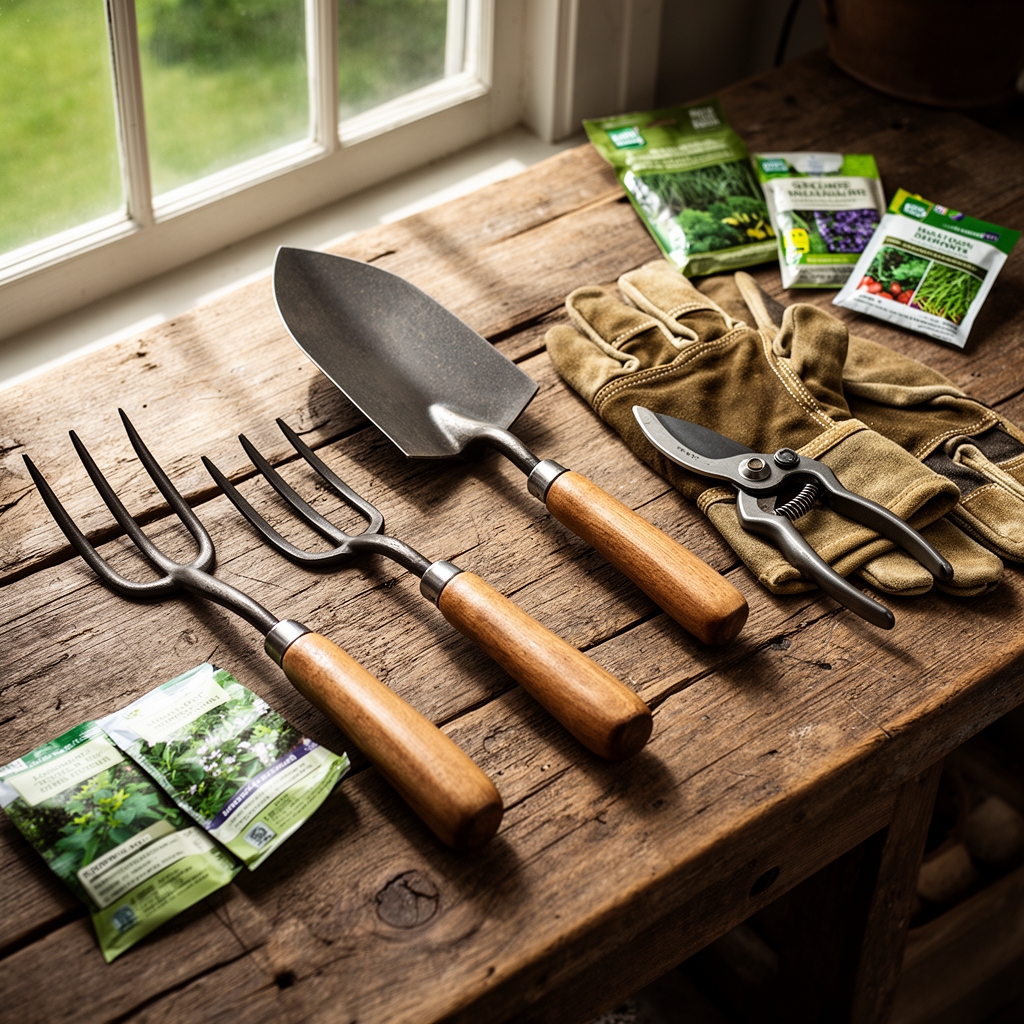
Additional materials include compost screened to 0.25-inch particle size, mycorrhizal fungi inoculant (Rhizophagus irregularis strain), a garden rake with 3-inch tines, a roller filled to 150 pounds for final grading, and a rotary tiller capable of working 6 inches deep.
Timing
Timing depends on hardiness zone and grass type. In zones 3 through 6, install cool-season sod (Kentucky bluegrass, perennial ryegrass, tall fescue) between late August and mid-October or mid-April through May. Soil temperatures between 50°F and 65°F promote rapid rooting without excessive top growth.
For zones 7 through 10, lay warm-season sod (Bermuda, Zoysia, St. Augustine) from late April through July when soil temperatures consistently reach 65°F to 70°F. Avoid installation during peak summer heat above 90°F, which stresses newly cut sod and increases water demand beyond practical irrigation capacity.
Plan installation 14 days after the final preparation step to allow soil settling. Order sod to arrive within 24 hours of laying to prevent root desiccation.
Phases

Site Clearing and Grading
Remove existing vegetation with a non-selective herbicide containing glyphosate at 2% concentration, applied 10 to 14 days before tilling. Strip dead plant material and debris. Establish a grade that slopes 2% away from structures, dropping 2 inches per 10 feet of horizontal distance. Remove rocks larger than 1 inch in diameter.
Pro-Tip: Mark sprinkler heads and utility lines with flags before tilling to avoid costly damage.
Soil Amendment and Tilling
Spread compost at 1 cubic yard per 1,000 square feet across the entire area. Add starter fertilizer according to soil test recommendations. Till to 6 inches depth, making two perpendicular passes to break up compaction layers and integrate amendments. This process increases cation exchange capacity, allowing soil to retain nutrients rather than leaching them below the root zone.
Pro-Tip: Inoculate tilled soil with mycorrhizal fungi at 1 ounce per 100 square feet, broadcast evenly and watered in 24 hours before sod delivery.
Final Grading and Firming
Rake the surface smooth, breaking clods larger than 0.5 inch. The finished grade should sit 1 inch below sidewalks and driveways to accommodate sod thickness. Roll the area once with a half-filled roller to identify low spots, then fill depressions and roll again with a fully weighted roller. The surface should be firm but not compacted; a footprint should indent no more than 0.25 inch.
Pro-Tip: Water the prepared bed 24 hours before installation to stabilize soil and prevent the sod from drying out the substrate immediately upon contact.
Troubleshooting
Symptom: Yellow streaks appearing 7 to 10 days after installation.
Solution: Nitrogen deficiency from poor soil contact. Lift affected sections, add 0.25 inch of compost, and re-lay. Apply liquid nitrogen at 0.25 pound per 1,000 square feet.
Symptom: Brown, mushy roots with a sour odor.
Solution: Anaerobic conditions from overwatering or poor drainage. Reduce irrigation frequency by 50%. Aerate with a core aerator once sod roots establish at 4 weeks.
Symptom: Gaps between sod pieces widening after 5 days.
Solution: Shrinkage from insufficient rolling or dry substrate. Top-dress seams with compost blended with sand (50:50 ratio) and roll lightly. Increase irrigation duration by 25%.
Symptom: Sod rolls not rooting after 14 days; edges curl upward.
Solution: Hardpan layer preventing root penetration. Remove sod, till to 10 inches, incorporate gypsum at 40 pounds per 1,000 square feet to improve soil structure, and re-install.
Maintenance
Water new sod daily for 14 days, applying 1 to 1.5 inches total per week divided into morning sessions. Soil should remain moist at 3 inches depth. Reduce frequency to every 2 days during weeks 3 and 4, then transition to twice-weekly deep watering at 1 inch per session.
Mow when grass reaches 3.5 inches, cutting no more than one-third of blade height. Use a sharp mower blade to prevent tearing, which creates entry points for fungal pathogens.
Apply a second fertilizer application 6 weeks after installation using a 3-1-2 NPK ratio at 0.75 pound nitrogen per 1,000 square feet. This supports auxin distribution for lateral shoot development and rhizome formation.
FAQ
When can I walk on new sod?
Limit foot traffic for 14 days. Roots need uninterrupted contact with soil to establish. After 3 weeks, normal use can resume.
How long until roots penetrate the native soil?
Roots extend 2 to 3 inches into underlying soil by day 14 in ideal conditions. Full integration occurs by week 6.
Can I install sod over existing grass?
No. Old roots decompose anaerobically beneath new sod, creating toxic byproducts and pest habitat. Always remove existing turf.
What is the minimum soil depth required?
Six inches of quality topsoil ensures adequate root development. Shallow soil over hardpan or gravel leads to drought stress and failure.
Should I use erosion netting under sod on slopes?
For slopes steeper than 15%, install jute netting and stake sod with 6-inch biodegradable pins every 18 inches to prevent sliding until roots anchor.