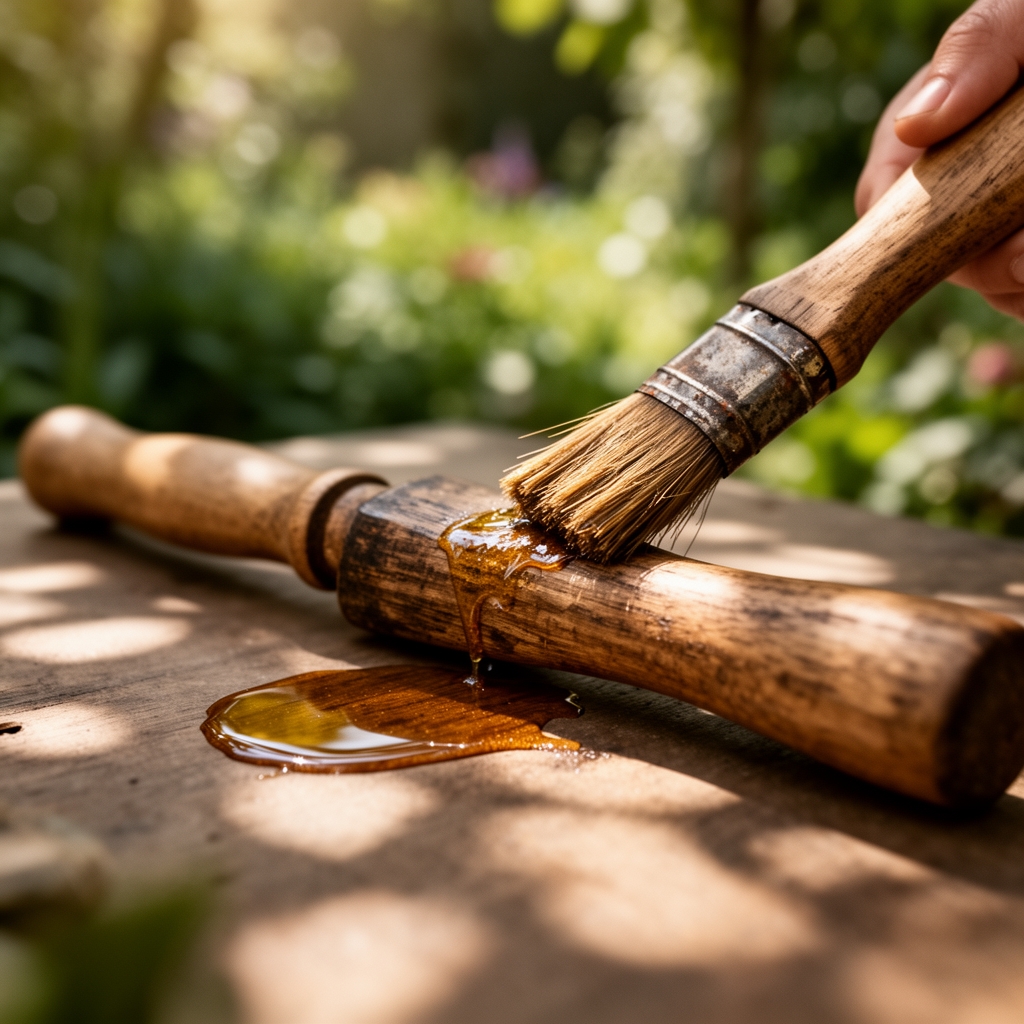
8 Ways to Prepare Wood Handles with Linseed Oil
Preparing wooden tool handles with linseed oil preserves the grain, prevents moisture intrusion, and extends the working life of garden implements by decades. The oil polymerizes within the wood's cellular structure, creating a flexible barrier that moves with seasonal expansion and contraction. Raw linseed oil penetrates deeper than boiled formulations, though the curing time extends from days to weeks. Each application builds a matte, protective patina that resists the degradation caused by soil contact, microbial action, and UV exposure.
Materials
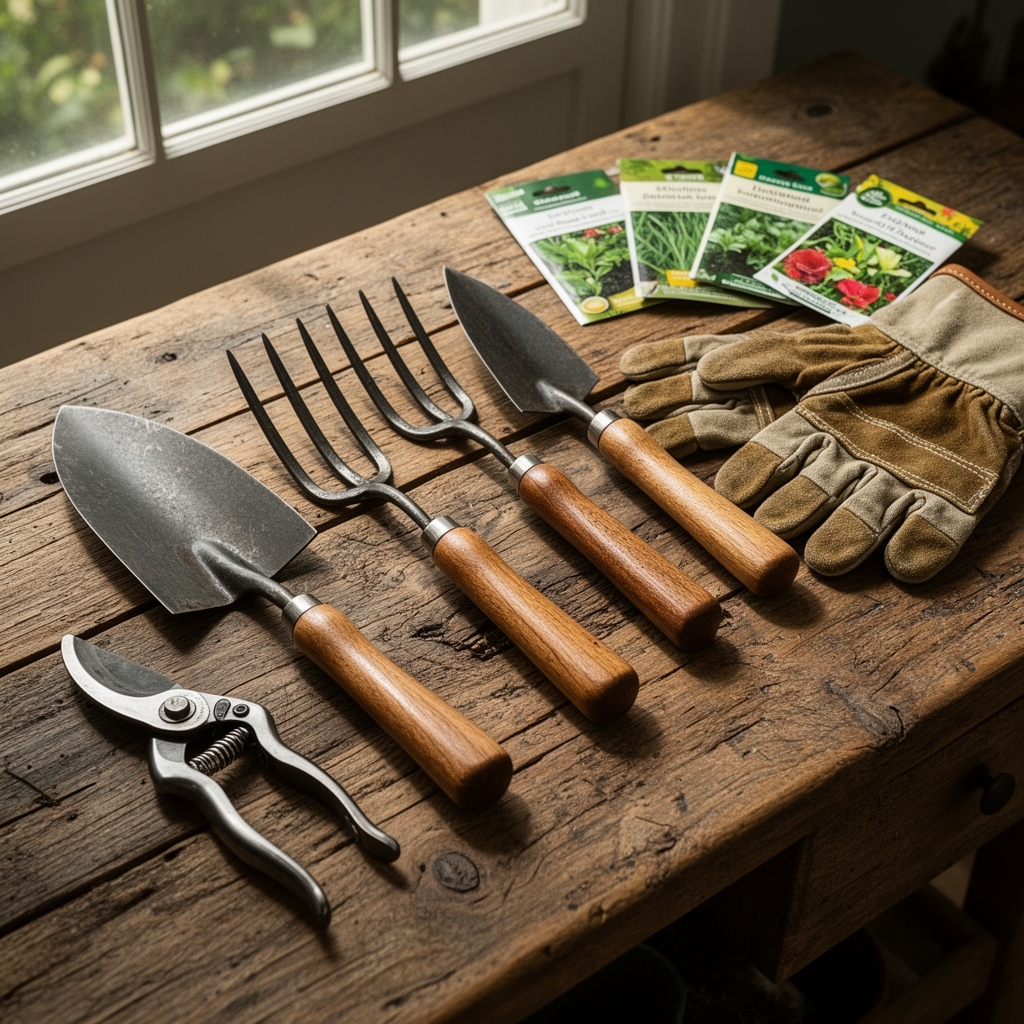
Select raw or boiled linseed oil based on your timeline. Raw linseed oil requires 72 hours between coats but achieves superior penetration into ash, hickory, or white oak handles. Boiled linseed oil (actually polymerized with metallic driers, not heated) cures in 24 hours but forms a slightly thicker surface film.
Fine-grit sandpaper in 120, 220, and 320 grades removes factory finishes and opens wood pores. Steel wool (0000 grade) burnishes between coats without scratching. Lint-free cotton rags absorb excess oil and prevent pooling in grain valleys.
Mineral spirits or turpentine thins the first coat for maximum absorption, creating a 50:50 ratio that behaves like a wood conditioner. This mixture has a neutral pH and introduces no nitrogen, phosphorus, or potassium, distinguishing it from soil amendments. The solvent evaporates, leaving only polymerized oil within the lignin matrix.
Disposable nitrile gloves protect skin from prolonged oil contact. A well-ventilated workspace prevents solvent vapor accumulation. Spread used rags flat to dry before disposal; wadded oil-soaked cotton can spontaneously combust through exothermic oxidation.
Timing
Wood treatment follows no hardiness zone calendar, but ambient temperature and humidity govern curing rates. Apply linseed oil when daytime temperatures hold between 60 and 75 degrees Fahrenheit. Humidity below 60 percent accelerates polymerization. Above 80 percent humidity, surface oils remain tacky for extended periods, attracting dust and pollen.
Avoid application during morning dew or evening condensation windows. The wood's moisture content should measure below 12 percent using a pin-type moisture meter. Freshly purchased handles often carry 15 to 18 percent moisture from warehouse storage and require one week of indoor conditioning before treatment.
Early spring or late autumn offer ideal conditions in temperate zones. Summer heat accelerates curing but may cause surface skinning before deep penetration occurs. Winter cold halts polymerization entirely below 50 degrees Fahrenheit.
Phases

Initial Preparation: Strip factory varnish or lacquer with 120-grit sandpaper, working parallel to the grain. Cross-grain sanding severs surface fibers and creates rough texture. Remove all dust with a tack cloth. Inspect for splits, checks, or compression damage near ferrule contact points.
Pro-Tip: Warm the handle to 85 degrees using a heat gun on low setting before the first oil application. Thermal expansion opens microscopic pores, increasing absorption by 30 percent.
First Application: Mix one part linseed oil with one part mineral spirits. Flood the handle using a saturated rag, maintaining wet coverage for 15 minutes. The wood will drink oil rapidly during initial exposure. Wipe away all standing oil after the soaking period. Vertical storage prevents pooling at the tool head junction.
Pro-Tip: Apply oil in 6-inch sections, allowing each zone to absorb fully before advancing. This prevents waste and ensures even penetration along the grain's auxin distribution channels.
Building Coats: Sand lightly with 220-grit paper after the first coat cures, removing raised grain fibers. Apply undiluted linseed oil for the second and third coats, maintaining 72-hour intervals for raw oil or 24-hour intervals for boiled. Each coat contributes less penetration and more surface protection. Four coats create a working finish; six coats approach furniture-grade durability.
Pro-Tip: Rotate handles 90 degrees between coats to address all radial surfaces equally. Heartwood and sapwood absorb at different rates due to varying cation exchange capacity.
Final Burnishing: After the final coat cures completely (one week for boiled, three weeks for raw), buff with 0000 steel wool. This removes minor surface irregularities and generates a soft luster. Handle the tool normally; hand oils and use will continue the seasoning process.
Troubleshooting
Symptom: Sticky, tacky surface after 48 hours.
Solution: Excess oil remains on the surface rather than within the wood. Wipe aggressively with mineral spirits to remove the uncured layer. Reapply thinner coats with complete wipe-off.
Symptom: White haze or clouding after drying.
Solution: Moisture contamination during application. Sand away the affected layer with 220-grit paper. Ensure wood moisture content stays below 12 percent and avoid humid conditions during curing.
Symptom: Dark water stains appear after garden use.
Solution: Insufficient oil penetration left untreated wood exposed. Strip and restart the process, focusing on end grain where water enters through capillary action. Seal end grain with extra coats.
Symptom: Handle feels rough or fuzzy.
Solution: Raised grain was not removed between coats. Sand with 320-grit paper and apply one additional thinned coat to re-seal the surface.
Maintenance
Reapply linseed oil annually or when the wood appears dry and grayed. A properly maintained handle requires only one coat per year, applied after cleaning soil residue with a stiff brush and water. Allow the wood to dry 24 hours before oiling.
Store tools in a dry location with air circulation. Moisture trapped against wood promotes fungal decomposition despite oil treatment. Inspect ferrules and metal junctions where water accumulates; these zones need supplemental attention.
Apply oil to clean, dry wood only. Soil particles, sap, or organic debris prevent oil penetration and create weak spots in the protective layer. A maintenance coat consumes approximately one tablespoon of oil per 36-inch handle.
FAQ
How does linseed oil differ from tung or Danish oil?
Linseed oil penetrates deeper due to smaller molecular size but requires longer curing. Tung oil dries harder and faster. Danish oil is a blend containing varnish, which builds surface film rather than soaking into wood structure.
Can I use linseed oil on cracked handles?
Oil will not repair structural damage but prevents crack expansion. Fill significant splits with wood glue before oiling. The oil seals minor surface checking.
Why avoid polyurethane or varnish?
Surface films crack under tool flex and trap moisture beneath the coating. Linseed oil moves with the wood and allows moisture vapor transmission.
How many coats do working tools need?
Three coats provide functional protection. Six coats suit display pieces or handles experiencing harsh conditions.
Does linseed oil attract insects or mold?
Fully cured linseed oil resists biological attack. Uncured oil may attract fungi in humid storage. Ensure complete polymerization before prolonged storage.