8 Best Specialized Tools for Tool Maintenance
The blade meets soil two hundred times a season, and each collision deposits clay, sap, and rust-precursor moisture into every crevice of the steel. Best tools for garden tool maintenance prevent this cascade of deterioration through mechanical intervention rather than replacement. A well-maintained spade cuts 30% deeper than a neglected twin. Wire brushes, honing stones, and linseed oil compounds form the foundational triad, but specialized instruments elevate maintenance from chore to precision calibration.
Materials
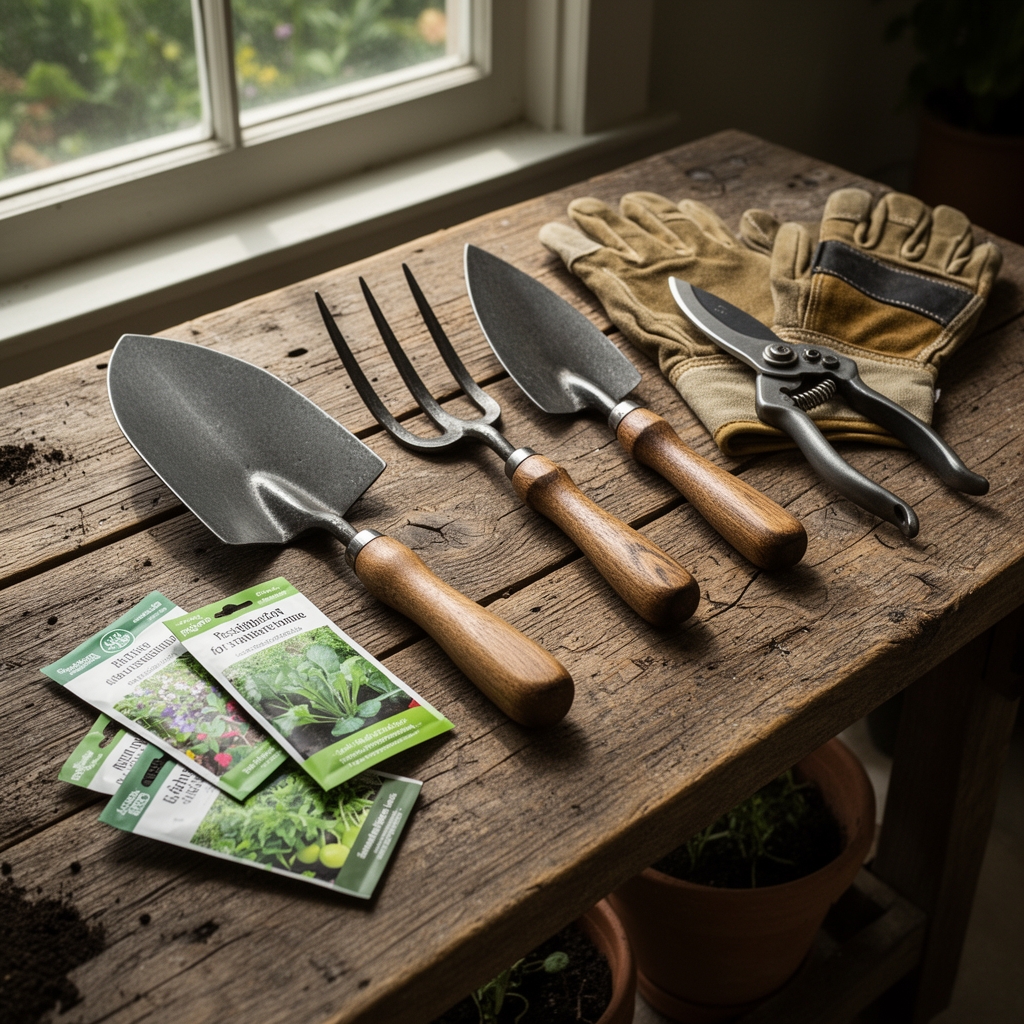
Wire brushes require carbon-steel bristles at 0.012-inch diameter for removing soil aggregates without scoring tempered blade surfaces. Brass brushes substitute when working softer metals like copper plant markers or aluminum tool shanks.
Mill bastard files at 10-inch length and "second cut" coarseness reshape beveled edges on hoes, shovels, and pruner blades. The 20-degree bevel angle standard across most digging implements demands consistent file strokes at matching geometry.
Whetstones in 1000-grit and 6000-grit pairing address different maintenance phases. The coarse stone repairs nicks and establishes primary bevels. The fine stone polishes the cutting edge to reduce cellular tearing during pruning cuts, which minimizes wound surface area and pathogen entry points.
Boiled linseed oil penetrates wood handles through capillary action, displacing moisture that causes swelling and compression of grain structure. Raw linseed oil remains tacky; only the boiled formulation polymerizes into a protective film. Application rate: 2 fluid ounces per 48-inch ash handle, applied in three thin coats over 72 hours.
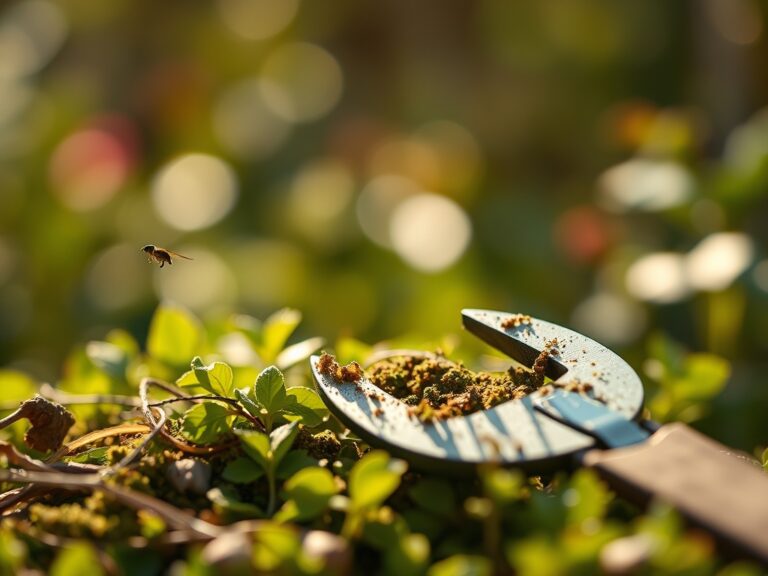
Penetrating oil in aerosol form reaches pivot points on bypass pruners and lopper mechanisms where viscous lubricants accumulate soil particles. PTFE-based formulas shed debris while maintaining lubrication at the shear point where blade and anvil meet.
Rust erasers use fine abrasive embedded in rubber blocks, removing oxidation without the aggressive material removal of sandpaper or wire wheels. They preserve tool dimensions while restoring bare metal for protective coating application.
Timing
Maintenance schedules align with hardiness zone freeze-thaw cycles rather than calendar dates. Zone 5 through 7 gardeners perform comprehensive maintenance during the November dormancy window, after final frost kills herbaceous growth but before frozen soil prevents outdoor work.
Spring maintenance occurs at forsythia bloom, roughly 6 weeks before last frost date. This phenological marker indicates soil temperature above 45°F, when frost heave no longer shifts tool storage areas and when oxidation accelerates under warming conditions.
Mid-season sharpening every 40 hours of soil contact maintains optimal cutting geometry. A season log tracking mulching, edging, and cultivation hours provides objective service intervals rather than subjective assessment of blade dullness.
Phases

Initial Cleaning
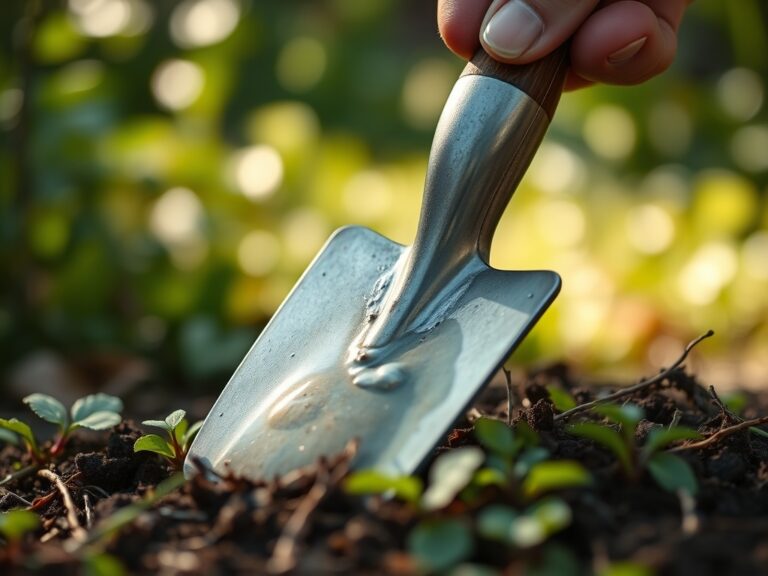
Remove all soil immediately after use. Dried clay bonds chemically to steel through cation exchange at the metal-soil interface, requiring ten times the mechanical force to remove compared to wet soil. A 5-gallon bucket of sharp sand serves as a abrasive bath; thrust the blade repeatedly into dry sand to scour surfaces.
Wash with pH-neutral soap and water only after mechanical soil removal. Alkaline detergents corrode aluminum ferrules. Acidic formulas etch carbon steel.
Pro-Tip: Store a dedicated natural-bristle brush at the potting bench. Synthetic bristles scratch protective oxide layers on stainless steel implements.
Sharpening Protocol
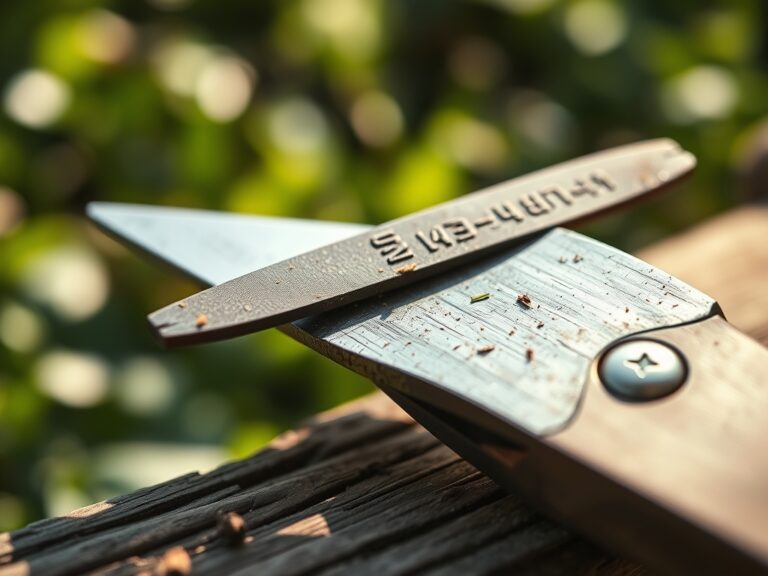
Secure the tool in a vise with the bevel facing your dominant hand. File in single-direction strokes from handle to tip, lifting the file on the return stroke to prevent dulling the file teeth. Maintain the original factory bevel angle, typically 20 to 25 degrees on digging tools and 15 to 20 degrees on pruning implements.
Count strokes per session: 20 strokes with the bastard file, 40 strokes with the 1000-grit stone, 60 strokes with the 6000-grit stone. This progression removes 0.003 inches of material and establishes a polished cutting edge without excessive steel removal that shortens tool lifespan.
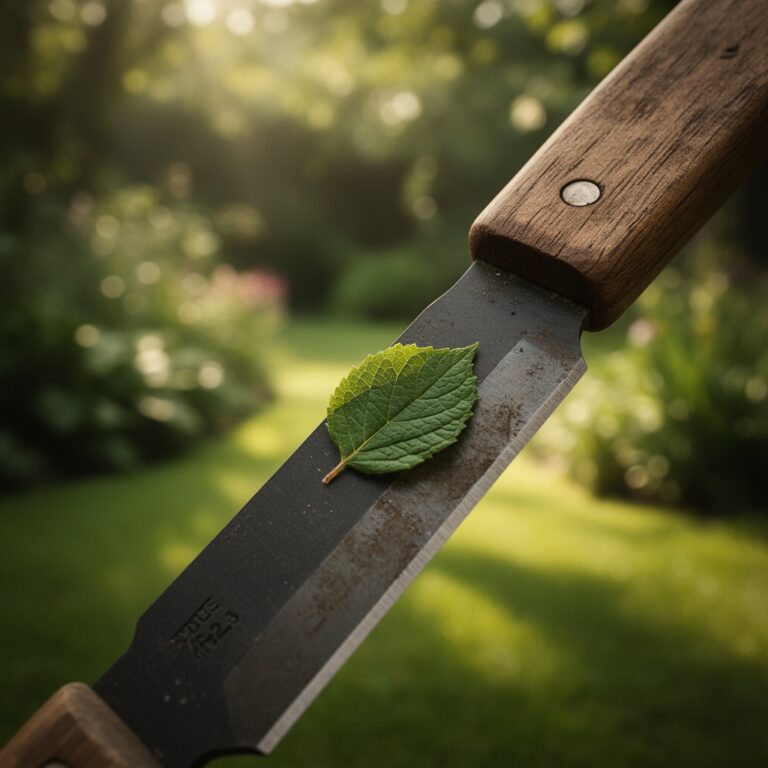
Test sharpness by slicing newsprint held vertically. A properly honed edge cuts cleanly without tearing fibers.
Pro-Tip: Sharpen pruners with the blade separated from the anvil. This exposes the entire cutting surface and prevents file contact with the softer anvil, which should remain blunt to support the cutting blade without binding.
Protective Coating
Apply boiled linseed oil to all wood components using lint-free cotton cloth. Flood the grain, wait 15 minutes for absorption, then wipe away surface excess. Repeat every 6 months or when wood appears dry and gray.
Coat steel surfaces with camellia oil or food-grade mineral oil immediately after sharpening. These non-polymerizing oils provide temporary protection during storage without building thick residue layers that attract dust.
Pro-Tip: Never paint or varnish tool handles. These film coatings crack under stress, trapping moisture against wood and accelerating rot. Oil finishes penetrate and flex with seasonal wood movement.
Troubleshooting
Symptom: Handle splits along grain lines near ferrule.
Solution: The ferrule compressed wood fibers during installation, creating stress concentrations. Drill a 1/8-inch relief hole through the ferrule perpendicular to the split, 1 inch above the crack. Apply oil and store vertically to prevent water accumulation.
Symptom: Pruner blade gaps from anvil during closing stroke.
Solution: The pivot bolt loosened through vibration. Tighten to finger-tight plus one-quarter turn with appropriate wrench. Over-tightening deforms the pivot bushing and increases friction.
Symptom: File skates across blade surface without cutting.
Solution: The file teeth clogged with metal particles or the blade surface hardness exceeds file hardness. Clean file teeth with a wire brush every 10 strokes. If the blade was heat-treated incorrectly at manufacture, it may require grinding wheel restoration before file maintenance becomes effective.
Symptom: Surface rust returns within days of removal.
Solution: Humidity exceeded the dew point during storage, condensing water on cold metal. Store tools in climate-controlled spaces above 60°F with relative humidity below 50%. Silica gel desiccant packs in tool chests reduce localized humidity.
Symptom: Wooden handle feels loose in ferrule.
Solution: Wood shrinkage from dehydration created gaps. Submerge the handle-ferrule junction in water for 2 hours to swell wood fibers, then coat with oil. If swelling proves insufficient, drive a hardwood wedge into the handle tang slot to expand wood against ferrule walls.
Maintenance
Sharpen digging tools every 40 hours of contact with mineral soil. Sandy soils abrade more slowly than clay, extending intervals to 60 hours. Volcanic soils contain abrasive particles that reduce intervals to 30 hours.
Apply 0.5 fluid ounces of penetrating oil to pruner pivot points monthly during the growing season. Wipe away excess that attracts dust.
Inspect wooden handles weekly for grain separation. Early detection allows oil treatment before structural failure.
Store tools off concrete floors, which wick moisture into wood through capillary action. Wall-mounted racks or wooden pallets provide 2 inches of clearance.
Clean and oil all tools within 4 hours of exposure to manure, compost, or green plant sap. These organic materials contain acids that etch steel and enzymes that degrade linseed oil polymerization.
FAQ
How often should garden tools be sharpened?
Every 40 hours of soil contact or when the blade requires pressure rather than weight alone to penetrate soil. Frequent light sharpenings preserve blade geometry better than infrequent aggressive restoration.
What grit whetstone works best for garden tools?
Begin with 1000-grit for edge establishment and finish with 6000-grit for polishing. Skip coarser stones unless repairing major damage; they remove excessive material.
Can WD-40 replace specialized tool oils?
WD-40 functions as a penetrating solvent, not a lubricant. It evaporates within weeks. Use camellia oil, mineral oil, or boiled linseed oil for lasting protection.
Should stainless steel tools be oiled?
Stainless steel resists corrosion but benefits from lubrication at pivot points and along cutting edges. Apply sparingly; excess oil attracts soil particles.
Why do wooden handles crack even with regular oiling?
Improper storage orientation allows water to pool in ferrule joints. Store tools with handles angled downward so moisture drains away from the wood-metal junction.